Case Study:
City of Worms
Making heat protection for daycare centres more transparent, data-driven and easier to prioritise

The challenge
Worms coordinates heat protection across a large number of daycare centres with very different physical conditions and levels of heat exposure. Until now, information on heat stress and site needs has often been scattered across PDF questionnaires, individual feedback and manual assessments.
That has made it difficult for the city’s climate adaptation team to maintain a clear overall view. Which facilities face the greatest pressure? Where have measures already been implemented? Which actions should be prioritised next?
Bringing local knowledge into the process
A key element of the pilot is the systematic involvement of daycare managers through an online survey. They can highlight where heat stress is most noticeable in daily operations, which temporary solutions are already in place, and where further support is needed.
This ensures that practical, site-level knowledge feeds directly into the prioritisation process. Rather than relying only on top-down assessments, the city can draw on the experience of the people managing heat risks on the ground every day.
“Daycare managers are our most important early warning system for heat stress. Without their feedback, we would risk planning past reality.”
Marco Elischer, Climate Adaptation Manager, City of Worms
The solution
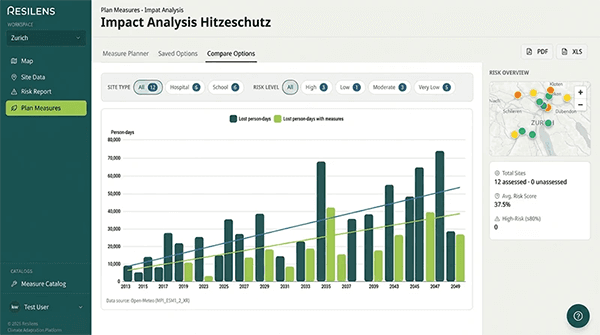
Together with the City of Worms, we are testing a digital pilot solution that brings fragmented information into one shared decision-making environment.
The platform combines self-assessments from daycare centres, site data, and the implementation status of planned measures in a single interface. This allows the climate adaptation team to identify highly exposed facilities compare needs across sites and see where short-term shading measures or larger investments may be most effective. Instead of working across disconnected spreadsheets and documents, the city is building a more current and transparent basis for action.
Why it matters
The pilot helps the city move from fragmented information and reactive decisions toward a more coordinated and transparent approach to heat adaptation. It creates a clearer basis for prioritising investments across daycare centres and helps ensure that limited resources are directed where they are needed most.
Outlook
The next step is to enrich the platform with additional operational data and refine it together with the departments involved. Over time, the same approach will be extended beyond daycare centres to other types of social infrastructure, such as schools or care facilities.
Pathways2Resilience: Digital support for the City of Worms
We support the City of Worms as part of its participation in “Pathways2Resilience”, an EU-funded programme supporting 100 local and regional authorities across Europe in developing stronger climate resilience strategies, action plans and investment plans. Worms is one of the selected participating regions.
As part of this work, we are building the city’s digital dashboard for climate resilience planning. The dashboard brings relevant climate adaptation information into one shared decision-making environment and supports a more transparent, practical, and data-informed approach to local resilience planning.
In Worms, this work builds on our ongoing collaboration around heat protection for daycare centres and helps create a stronger digital foundation for prioritisation, coordination and implementation across the city’s climate adaptation activities.
This project has received funding from the European Union’s Horizon Europe research and innovation programme under grant agreement No 101093942. The European Commission is not responsible for any use that may be made of the information it contains.