Research and evidence for climate adaptation decisions.
Resilens publishes original research, working papers, and data briefs on climate adaptation decision-making — supporting planners, investors, and policymakers who need to act on climate risk.

|
Christian Schmelter
Blog
We look at why Germany's heat protection debate keeps circling the question of responsibility, and what France put in place after 2003 that Germany still does not have.
Christian Schmelter
Blog
We look at why Germany's heat protection debate keeps circling the question of responsibility, and what France put in place after 2003 that Germany still does not have.
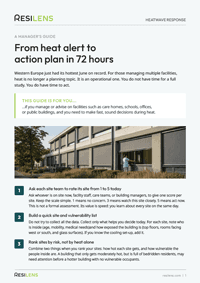
Western Europe has just had its hottest June on record. For teams managing multiple facilities, extreme heat has moved from long-term risk planning into day-to-day operations. A full study can take months. You can act now.
Western Europe has just had its hottest June on record. For teams managing multiple facilities, extreme heat has moved from long-term risk planning into day-to-day operations. A full study can take months. You can act now.

Climate scientists retired the worst-case emissions scenario, and it was quickly read as an admission of overreach. It was not, and the risk behind adaptation planning has not gone down. What changed is that the business-as-usual case can no longer be applied by default.
Climate scientists retired the worst-case emissions scenario, and it was quickly read as an admission of overreach. It was not, and the risk behind adaptation planning has not gone down. What changed is that the business-as-usual case can no longer be applied by default.

A new University of Zürich study puts a CHF price tag on what heat already costs Swiss hospitals, and shows the bill rising in every scenario. The missing piece is an investment case that turns that evidence into funded action.
A new University of Zürich study puts a CHF price tag on what heat already costs Swiss hospitals, and shows the bill rising in every scenario. The missing piece is an investment case that turns that evidence into funded action.
|
anders bauen, Bundesstiftung Bauakademie
Podcast
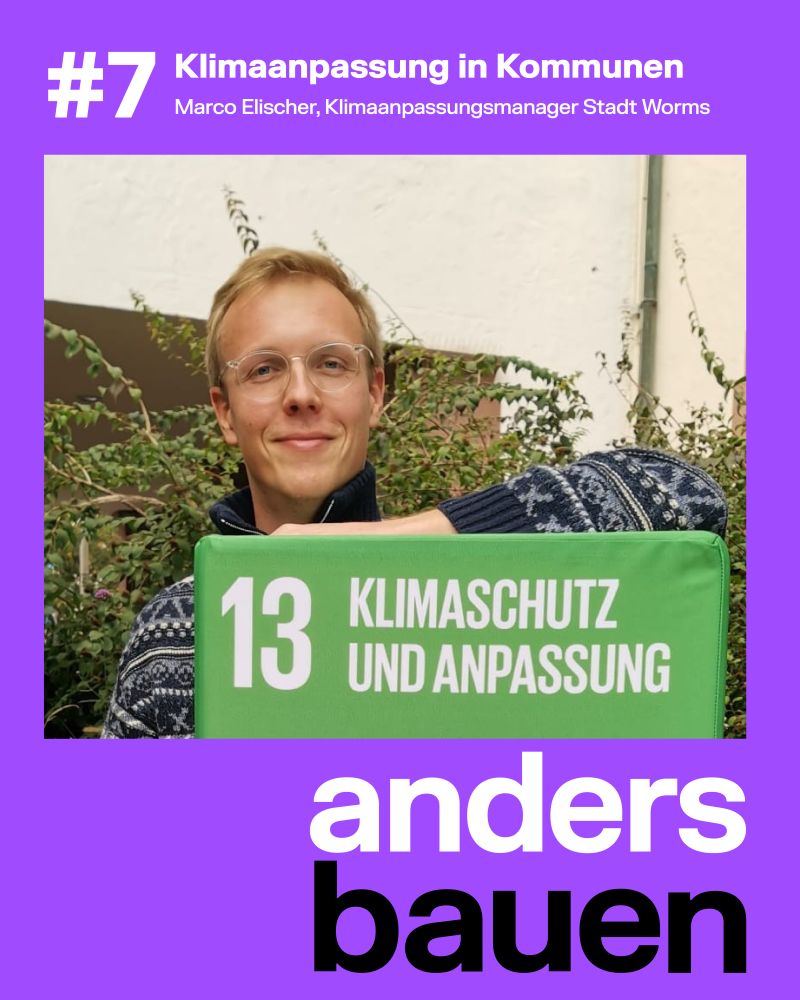
Marco Elischer, Klimaanpassungsmanager der Stadt Worms, spricht im Podcast „anders bauen" der Bundesstiftung Bauakademie
Marco spricht über das Ziel, Klimaanpassung nicht länger als Kostenfaktor zu verbuchen, sondern als Investition in die Zukunft vermittelbar zu machen. Im Projekt Pathways2Resilience entwickelt Resilence dazu mit Worms eine digitale Lösung, die die Priorisierung von Maßnahmen beschleunigt, Klimadaten präziser nutzbar macht und das Wissen der Menschen vor Ort einbezieht.
anders bauen, Bundesstiftung Bauakademie
Podcast
Marco Elischer, Klimaanpassungsmanager der Stadt Worms, spricht im Podcast „anders bauen" der Bundesstiftung Bauakademie
Marco spricht über das Ziel, Klimaanpassung nicht länger als Kostenfaktor zu verbuchen, sondern als Investition in die Zukunft vermittelbar zu machen. Im Projekt Pathways2Resilience entwickelt Resilence dazu mit Worms eine digitale Lösung, die die Priorisierung von Maßnahmen beschleunigt, Klimadaten präziser nutzbar macht und das Wissen der Menschen vor Ort einbezieht.

|
Dr Oliver Marchand, Louie Woodall
Podcast
When adaptation managers approach funders with a climate-proofing measure, there is one question they are always asked: "What's the return on this investment?"
In this episode, Oliver Marchand explains how adaptation teams can answer that question. If you work in climate adaptation, climate technology, or climate finance, this is an episode you don't want to miss.
Dr Oliver Marchand, Louie Woodall
Podcast
When adaptation managers approach funders with a climate-proofing measure, there is one question they are always asked: "What's the return on this investment?"
In this episode, Oliver Marchand explains how adaptation teams can answer that question. If you work in climate adaptation, climate technology, or climate finance, this is an episode you don't want to miss.
|
Resilens & CLIMADA Technologies
Research Paper
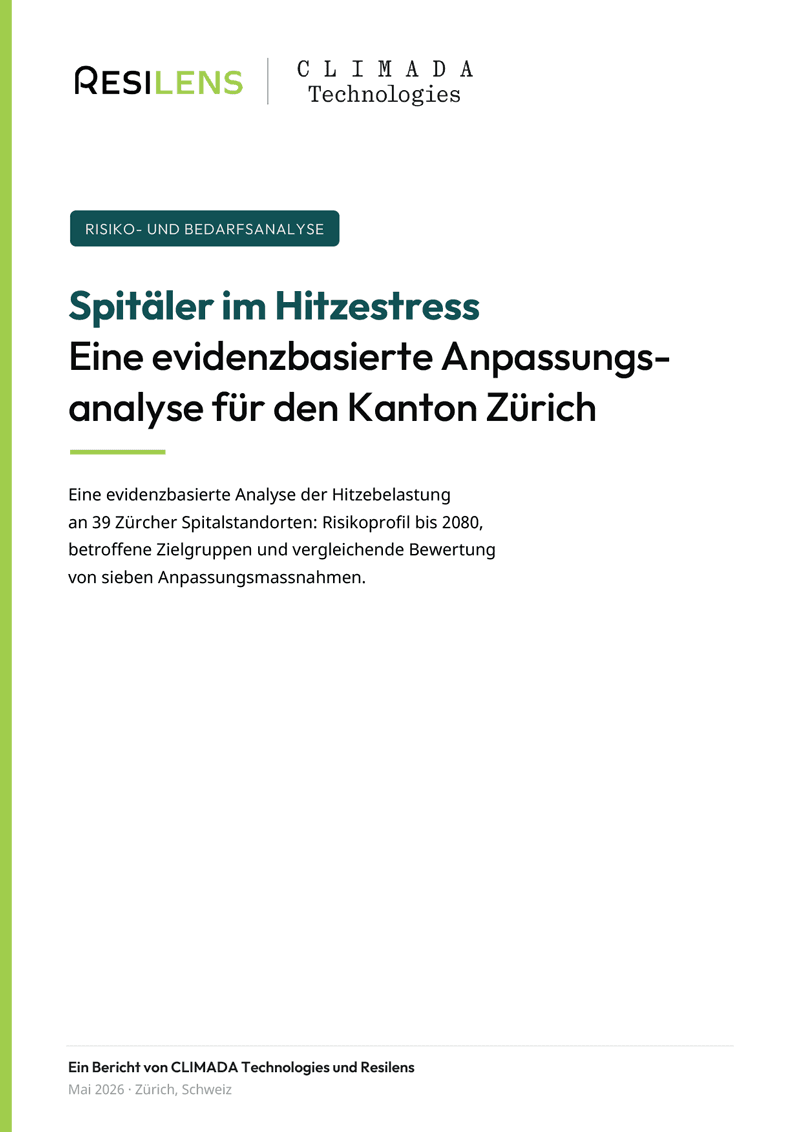
Ein gemeinsamer Bericht von Resilens und CLIMADA Technologies zur Hitzebelastung an 39 Zürcher Spitalstandorten. Die Studie analysiert das Risikoprofil bis 2080, identifiziert die am stärksten betroffenen Zielgruppen und vergleicht sieben Anpassungsmassnahmen hinsichtlich Wirtschaftlichkeit und Fehlanpassungsrisiko.
Resilens & CLIMADA Technologies
Research Paper
Ein gemeinsamer Bericht von Resilens und CLIMADA Technologies zur Hitzebelastung an 39 Zürcher Spitalstandorten. Die Studie analysiert das Risikoprofil bis 2080, identifiziert die am stärksten betroffenen Zielgruppen und vergleicht sieben Anpassungsmassnahmen hinsichtlich Wirtschaftlichkeit und Fehlanpassungsrisiko.
Climate losses are increasing, but adaptation investment is not keeping pace. In Make Adaptation Happen, a manifesto published with Climate Proof, we examine the main barrier slowing adaptation: the gap between climate data and investment decisions that leaves practitioners unable to compare, justify, or fund the measures they need. The paper introduces AdaptationReturn, our decision metric for estimating the value of an adaptation investment before implementation.
Climate losses are increasing, but adaptation investment is not keeping pace. In Make Adaptation Happen, a manifesto published with Climate Proof, we examine the main barrier slowing adaptation: the gap between climate data and investment decisions that leaves practitioners unable to compare, justify, or fund the measures they need. The paper introduces AdaptationReturn, our decision metric for estimating the value of an adaptation investment before implementation.

Quantify impact. Prioritize measures.
Fund what works.
Book a 30-minute demo. We will take a portfolio like yours through the full workflow and show what AdaptationReturn can surface.
Quantify impact. Prioritize measures.
Fund what works.
Book a 30-minute demo. We will take a portfolio like yours through the full workflow and show what AdaptationReturn can surface.
Resilens publishes original research, working papers, and data briefs on climate adaptation decision-making — supporting planners, investors, and policymakers who need to act on climate risk.